More than just providing sanitation facilities, restroom trailers incorporate diverse eco-friendly features beneficial for both the environment and users. To start with, these portable amenities are designed with efficient water usage systems, significantly reducing water consumption compared to traditional restrooms. Many restroom trailers utilize low-flow taps and flush systems, ensuring minimal waste of water resources. This is especially important in conserving water cumulatively across multiple events where these trailers are employed. Furthermore, restroom trailers often incorporate solar-powered features, reducing reliance on conventional energy sources and decreasing the carbon footprint. Solar panels can power interior lighting, ventilation fans, and other electrical systems within the trailer, enhancing self-sufficiency and eco-compatibility. This energy efficiency is accompanied by the trailers' convenient on-site waste management systems. By containing and processing waste within designated holding tanks, these systems minimize the risk of environmental contamination, ensuring that waste is dealt with responsibly in designated facilities. The modular design of restroom trailers also means reduced land disruption. When used in outdoor events or remote areas, they preserve natural land features and maintain the integrity of the environment by eliminating the need to construct permanent restroom facilities. Moreover, these trailers are increasingly constructed from recycled materials and boast eco-friendly cleaning solutions and deodorizers, keeping them compliant with environmental standards while ensuring efficiency. Some models boast composting toilet options, further embracing sustainable waste practices. Collectively, these attributes contribute to providing a clean, safe, and environmentally conscious restroom option, making them a preferred choice for eco-minded event planners and organizations. Overall, choosing restroom trailers supports sustainability efforts and highlights a commitment to reducing ecological impact while maintaining high sanitary standards for guests and event participants alike.

Restroom Trailer Rentals in Sprague, Virginia
Call today for a free quote (276) 277-9235
Restroom Trailer
Fast, Easy, & 100% Free To Get Started
Over 20 Years of Expertise
For over two decades, R&R Enterprises has served the community of Sprague with unparalleled dedication. Our expert team, deeply rooted in family and tradition, provides quality service with a personal touch, ensuring customer satisfaction at every step.
Unmatched Quality Service
Experience top-notch quality service with R&R Enterprises, where our skilled team ensures every project exceeds expectations. Our commitment to excellence means delivering products that guarantee satisfaction and reliability.
Swift and Prompt Delivery
We recognize how crucial time management is, so our delivery service prioritizes speed and efficiency. Rely on us to provide a Restroom Trailer swiftly, keeping your event or construction site running smoothly and without hassle.
Reliable Restroom Trailer Rentals in Sprague
Call for a Free Quote Today
(276) 277-9235
Located in the heart of Sprague, Virginia, our locally owned restroom trailer company distinguishes itself through dependable service and a strong commitment to the community. Whether you're managing a nearby construction site, hosting a lively festival, planning a picturesque wedding, or setting up an enjoyable party, our premium restroom trailers are ready to fulfill your needs. Our professional team provides seamless service and excellent customer support, ensuring your event runs smoothly without any sanitation issues. We serve a wide array of locations, guaranteeing that wherever you are in Virginia, you can access clean, comfortable, and convenient restroom solutions. Rely on our expertise and dedication to make your event truly memorable.
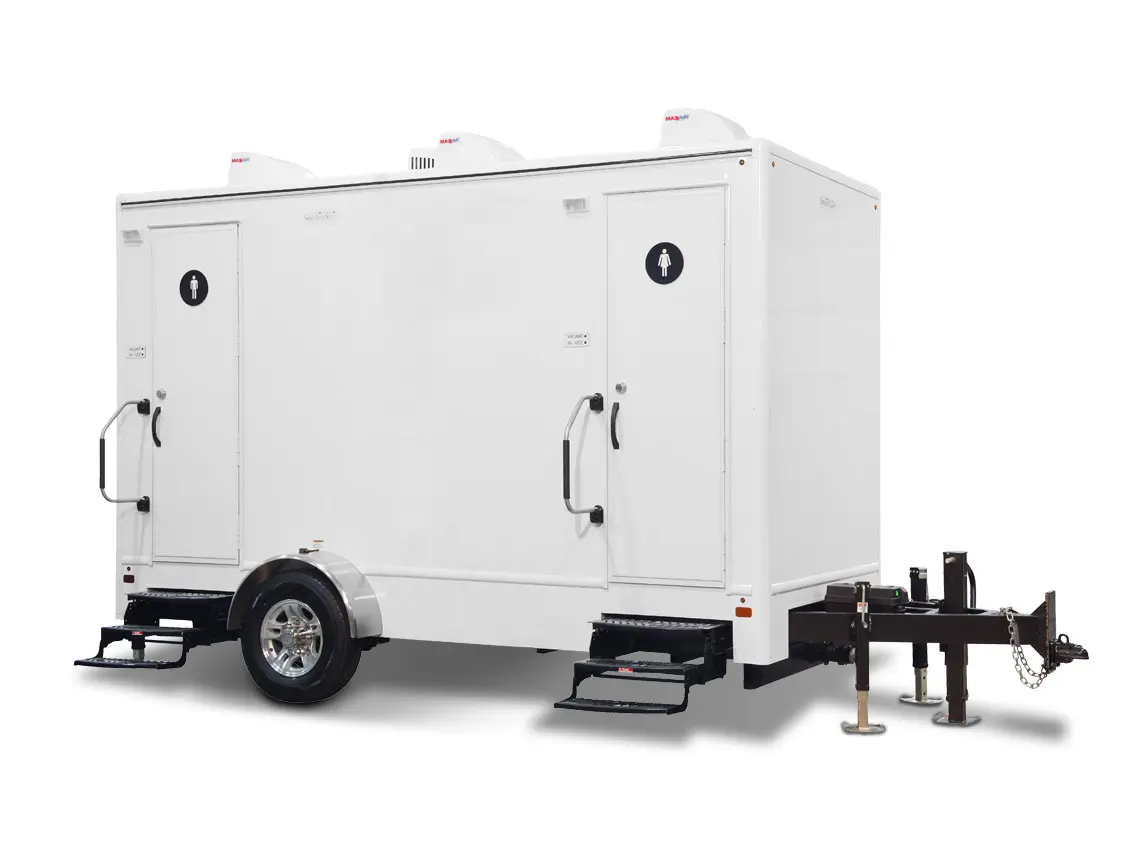
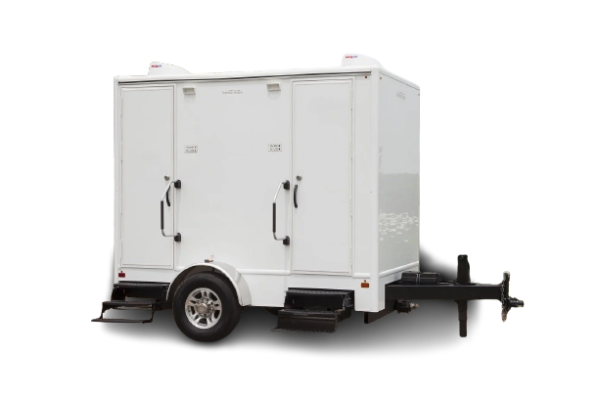
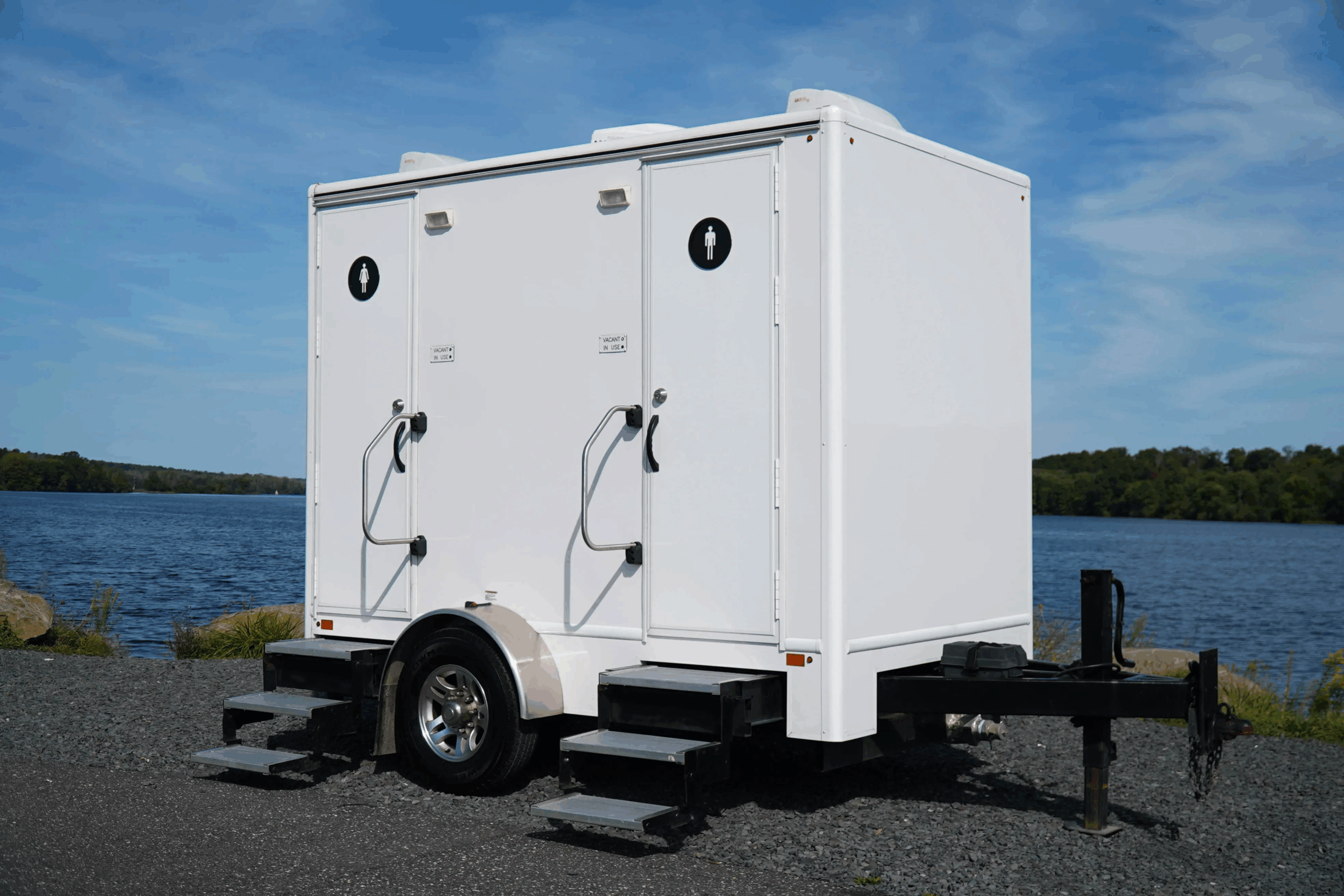
A compact, stylish solution featuring separate entrances for men and women.Each private suite includes flushing toilets, sinks with running water, interior lighting, and climate control for comfort at any event or worksite. (We offer variants 2–10 stalls.)
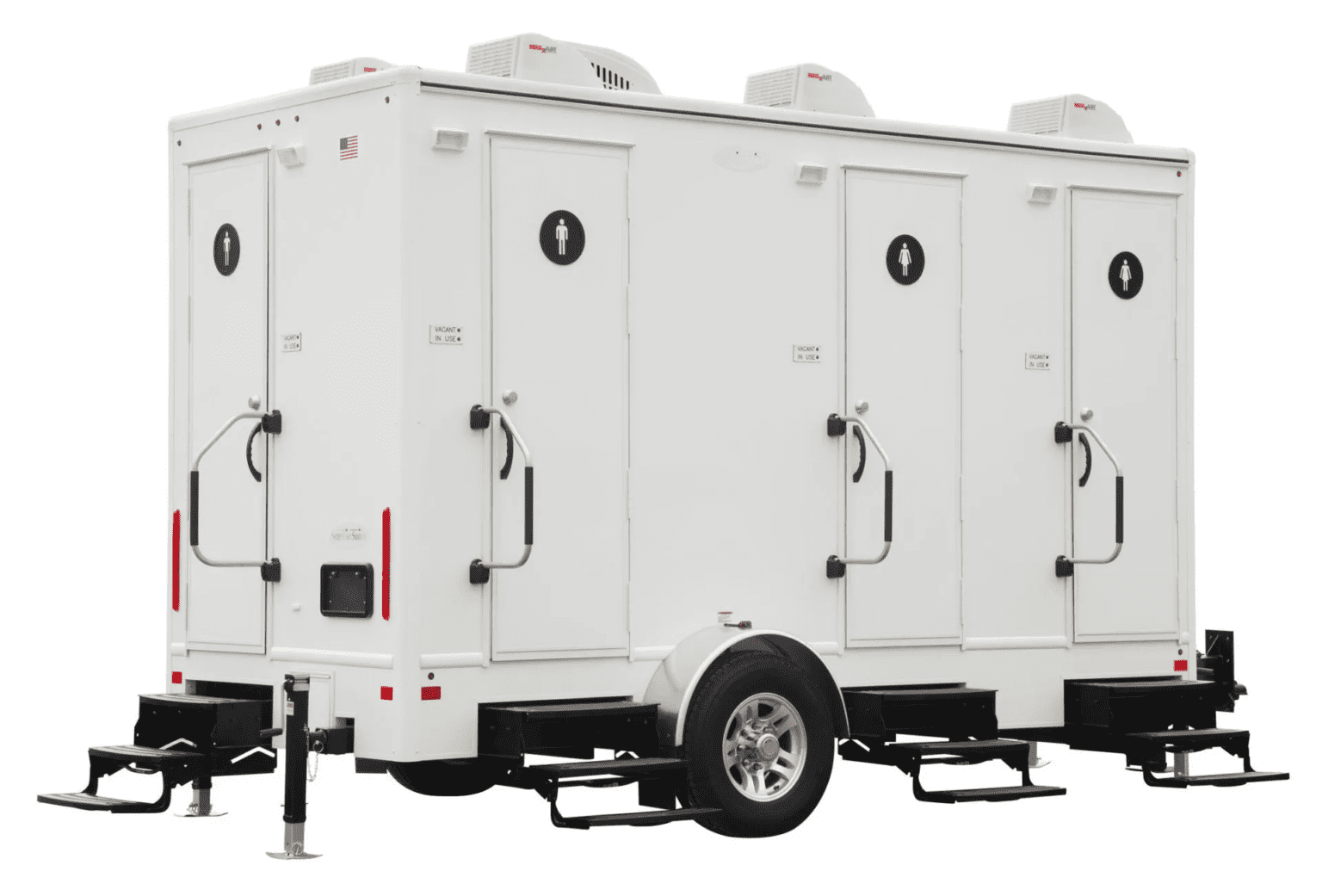
Designed for higher guest capacity, this unit offers four private, individual restrooms with flushing toilets, sinks with running water, interior lighting, and climate control. Ideal for weddings, festivals, and busy job sites.(We offer variants 2–10 stalls.)
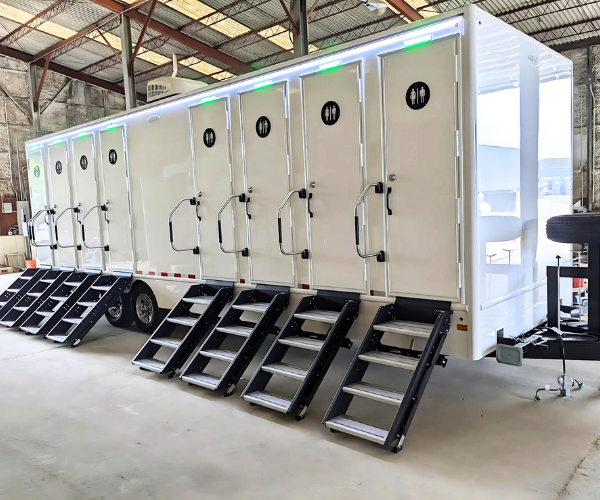
Perfect for large events and high-traffic sites, this spacious trailer provides eight private stalls, each with a flushing toilet, sink with running water, interior lighting, and climate control. A reliable, upscale solution for maximum convenience and comfort.(We offer variants 2–10 stalls.)
We Proudly Serve
Standard Portable Toilets
R&R Enterprises offers clean, reliable standard portable toilets throughout Virginia for any occasion.
High Rise Portable Toilets
Providing high rise portable toilets for elevated job sites, ensuring comfort and convenience in Sprague.
Restroom Trailers
Offering luxurious restroom trailers in Sprague, tailored for events with a blend of comfort and sophistication.
Plumbing
Expert plumbing services in Sprague by R&R Enterprises, ensuring efficient and reliable solutions for your home or business.
Septic Tank Cleaning
Professional septic tank cleaning services by R&R Enterprises ensure optimal performance and longevity of systems across Virginia.
Grease Trap Cleaning
Efficient grease trap cleaning service by R&R Enterprises, maintaining sanitary standards in Sprague, Virginia.
Fencing & Barricades
R&R Enterprises delivers dependable fencing and barricade services throughout Virginia, enhancing safety and security.
Residential Storage
Reliable residential storage solutions offered by R&R Enterprises, serving the Sprague area with secure options.
Sprague Restroom Trailer and More
Access restroom trailer rentals in Sprague swiftly and conveniently through our seamless process. Begin with a simple click using our intuitive 'Get A Quote' feature to receive detailed estimates and personalized options tailored to your event's specific needs. Our user-friendly interface guides you in selecting the perfect trailer size, additional amenities, and delivery details.Once you submit your request, our experienced team processes your inquiry swiftly, ensuring quick communication and transparent pricing. We take pride in providing accurate quotes that reflect current market conditions, eliminating unexpected costs or delays. Beyond quotes, we offer flexible delivery schedules, guaranteeing timely arrivals aligned with your event timeline.Rely on our extensive network and logistical expertise to ensure secure transportation and precise trailer placement at your location. Our professional drivers skillfully navigate local streets, synchronizing delivery with your convenience and event setup. Each trailer undergoes thorough sanitation and safety inspections before dispatch, demonstrating our dedication to client satisfaction and attendee comfort.Experience ease and efficiency when renting restroom trailers with us. Our personalized service extends beyond delivery, with dedicated support staff ready to address any concerns or changes in arrangements. Enjoy the simplicity of obtaining a quote and booking your rental, allowing you to focus on planning a memorable event.
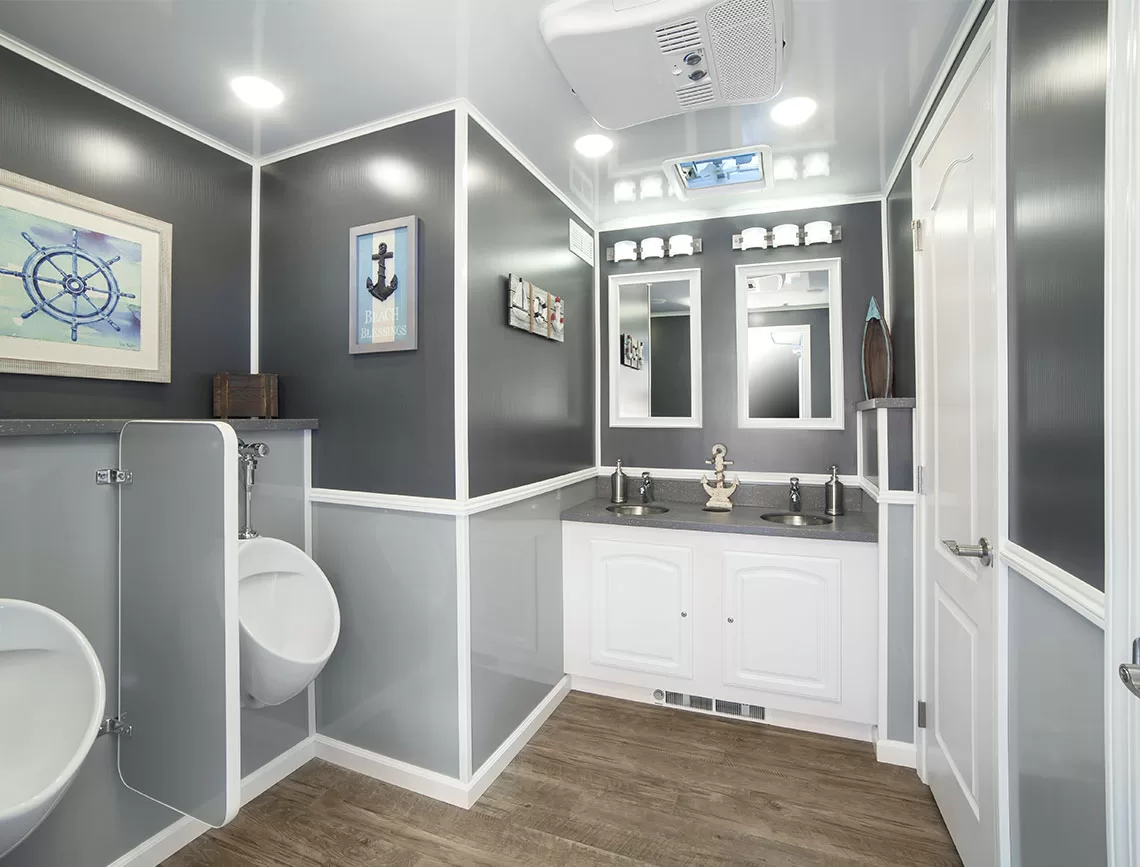
Capture the essence of Sprague's outdoor allure and vibrant community events with our premier restroom trailer services. Perfectly suited for local festivals and nature-centered gatherings like the annual Sprague Arts and Music Festival, our trailers add a touch of elegance and comfort. Imagine your guests enjoying all that Sprague offers without compromising on sanitation standards, courtesy of our state-of-the-art facilities. With features designed for reliability and convenience, our trailers ensure every event exceeds expectations. In proximity to nature's charms, such as the scenic Blackwater Creek and its surroundings, these mobile units are ideal for any occasion. Whether it's a warm summer wedding or a bustling corporate gathering, our service is tailored for the unique landscape and hospitality of Sprague. We pride ourselves on being the top choice for restroom solutions, reinforcing community events with our clean, efficient, and reliable units.
Stunning natural scenery and rich local culture make Sprague an exciting place for memorable events. Our commitment to convenience and quality positions us as the leading choice for restroom trailer services in the area. Designed with user comfort in mind, our modern trailers fit seamlessly into any setting, elevating the guests' overall experience.Distinguished by our reliability and superior service delivery, we stand out in the event industry. Opt for our services to enjoy hassle-free logistics and guarantees that keep our clients returning for every occasion. Experience the best Sprague has to offer with our tailored restroom solutions, delivering satisfaction and lasting impressions at every event.
Our reputation thrives on delivering fast, dependable restroom trailer services that cater to any event's needs.From the moment you inquire to the final delivery, our streamlined process ensures your priorities come first. With efficient scheduling and meticulous attention to detail, our trailers arrive on time, set up swiftly, and are immediately ready for use. Our team of professionals and well-maintained equipment remove the stress from planning and execution.We emphasize flexible delivery and setup to accommodate unexpected changes, ensuring complete client satisfaction. Our trailers go beyond a simple rental, playing a key role in crafting unforgettable experiences, underpinned by our commitment to quality and service excellence.
Sprague: Discover Our Restroom Trailer
Renting a restroom trailer in Sprague is simplified with our streamlined process aimed at providing convenience and efficiency. The journey begins at our website, where potential clients can access forms meticulously crafted to gather essential details. Positioned strategically at the top and bottom of the page, these forms allow visitors to enter basic information such as their first name, last name, phone number, and email. These components are crucial in facilitating efficient communication and ensuring tailored service offerings to meet the individual needs of our clients. To enhance operational ease, strategically placed 'Get A Quote' buttons are distributed throughout our webpage. These buttons act as a direct gateway to our quoting system, offering real-time calculations and transparent pricing options.Upon engaging these functionalities, clients can expect an immediate callback from our dedicated team, who prioritize swift inquiry handling and personalized service delivery. We take pride in our ability to clarify questions promptly and effectively, ensuring potential challenges are addressed proactively. This focus on customer centricity is reflected in the positive feedback we consistently receive, underscoring our commitment to reliable service. Our comprehensive process encompasses a spectrum of event types, from weddings to corporate functions, all requiring reliable sanitation solutions. By maintaining open channels of communication and adhering to flexible scheduling, we accommodate the diverse preferences and timeframes of our valued clients. With a wealth of experience and extensive service network, opting to rent our restroom trailer ensures ease, reliability, and the exceptional quality synonymous with our brand.
Understanding the significance of timely delivery, our service emphasizes efficiency and reliability when it comes to delivering restroom trailers. Typically, orders are finalized within a minimum timeframe that aligns with our clients' schedules, ensuring prompt trailer dispatch. The specific timeframe for delivery is finely tuned according to the particular needs of each event, considering factors such as location, trailer type, and any additional customization requests.Upon receipt of your order, our logistics team promptly springs into action, preparing the necessary resources to ensure a seamless delivery. Utilizing our extensive transport network and strategically positioned distribution centers, we facilitate rapid transit times, reducing any potential desynchronization with your event timeline. Clients are promptly notified throughout key stages via specified communication channels, keeping all stakeholders fully informed of progress and ensuring anticipation is managed effectively.For more urgent requirements, expedited services are available on request, with dedicated support to oversee all logistical preparations and arrangements. Our emphasis on precision and reliability means trailers arrive fully equipped, sanitized, and ready for immediate use. This ensures no disruption during your event setup or execution. Overall, while our standard delivery window remains flexible to adapt to diverse client needs, we pride ourselves on achieving delivery milestones without compromising on quality or safety standards. Our emphasis on efficiency, customer communication, and robust logistics management positions us as a trusted partner in delivering restroom trailer solutions on time, every time.
Yes, indeed! Our company can accommodate an extensive range of events and construction services to suit your needs. We provide sanitation facilities for all types of gatherings, including vibrant festivals, thrilling sporting events, romantic weddings, elaborate corporate functions, cozy family reunions, and any other special events you might organize. Our array of services includes offering deluxe luxury restroom trailers that elevate any occasion with elegance and comfort.Our versatile offerings ensure that from intimate gatherings to grand events, all sanitation considerations are covered effectively. In addition to restroom trailers, we offer complete service packages featuring standard porta-potties, ADA-compliant units ensuring accessibility for all guests, and roll-off dumpsters for waste management. Our repertoire extends to cover essential amenities like holding tanks for water storage, portable sinks, and strategic hand sanitization stations, providing maximum utility and hygiene.Furthermore, our robust business division specifically caters to construction projects, offering secure fencing, barricades for seamless logistics, and other operational elements. This approach ensures that we uphold safety and efficiency standards across construction undertakings.Our commitment to excellence means we adapt our offerings according to the scale and specificity of each requirement, putting special emphasis on customization. Clients can choose services aligning with thematic preferences or logistical demands. Through close collaboration with event planners and construction teams, we provide personalized solutions that enhance both functionality and experience, ensuring a seamless and distinguished service for any scenario.